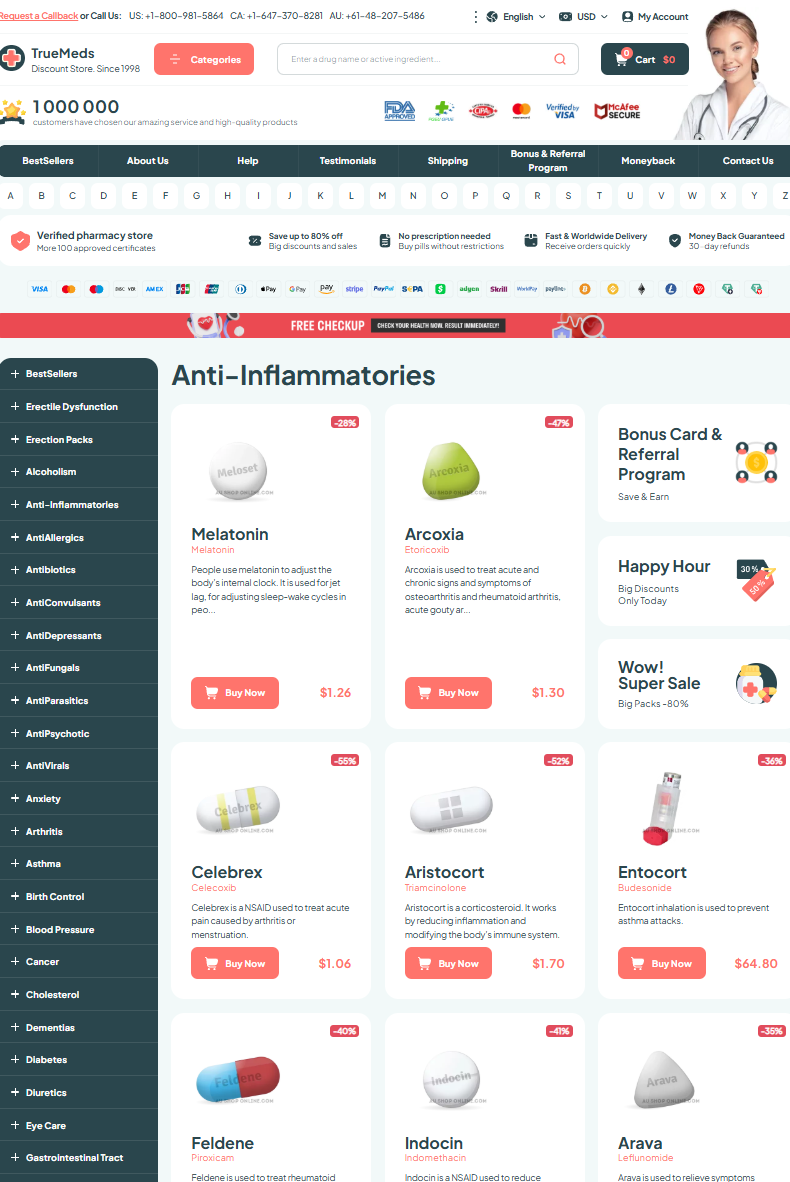
Need Amoxicillin? Here’s Why Australians Are Buying It Online (and What You Should Know). Visit Our Pharmacy ↓
Amoxicillin: The Trusted Antibiotic That Can Get You Back to Life Faster
A doctor’s review for Australians over 30
Attention: Don’t Let a Simple Infection Steal Your Week
If you are over 30, you already know the pattern. You feel a scratchy throat, an earache, a cough, or a dull pressure in your sinuses. You tell yourself it will pass. You push through work, family responsibilities, bills and the constant mental load. Then, three or four days later, you are worse — exhausted, feverish, and unable to function. The infection has taken hold, and now you are losing time you cannot afford to lose.
As a doctor, I see this every week. A 42-year-old father comes in with a chest infection and says, “I don’t have time to be sick.” A 35-year-old teacher arrives with a painful ear infection and cannot hear properly in class. A 58-year-old with a dental abscess has been unable to eat or sleep for two days. The common thread is often the same: a bacterial infection that could have been treated earlier with the right antibiotic.
This is where amoxicillin comes in. It is not a new, flashy medication. It is a time-tested, reliable penicillin antibiotic that has been used safely for decades and is still one of the most commonly prescribed antibiotics in Australia. If your doctor confirms a bacterial infection, amoxicillin may be exactly what you need to stop the misery and start recovering.
Interest: Why Do Australian Doctors Still Trust Amoxicillin?
Amoxicillin belongs to the penicillin family of antibiotics. It works by attacking the cell wall of bacteria, causing the bacteria to break apart and die. Because it is absorbed well when taken by mouth, it reaches effective levels in the blood, middle ear, sinuses, lungs and urine. It is available in capsules, tablets and a liquid suspension, which makes it suitable for adults and many older children.
It is listed on the World Health Organization’s List of Essential Medicines, and in Australia it is subsidised by the Pharmaceutical Benefits Scheme (PBS), making it affordable for most patients. When used correctly, amoxicillin can treat a wide range of common infections, including:
| Condition | Where Amoxicillin Fits In |
|---|---|
| Ear infections (acute otitis media) | Amoxicillin is a first-line oral antibiotic for adults and children when an ear infection is severe, persistent, or causing significant pain and fever. |
| Mild community-acquired pneumonia | Amoxicillin is effective against Streptococcus pneumoniae, one of the most common bacterial causes of pneumonia in the community. |
| Sinus infections | When bacterial sinusitis is suspected, amoxicillin can clear the infection and reduce facial pressure, congestion and headache. |
| Dental abscesses | Dental infections respond well to amoxicillin, often alongside dental treatment. |
| Endocarditis prophylaxis | For high-risk cardiac patients, amoxicillin is recommended before certain dental procedures to prevent heart valve infection. |
This broad usefulness is one reason amoxicillin has remained a cornerstone of Australian general practice for decades. It is not a cure for every infection — it does not treat colds or flu, which are viral — but when a bacterial infection is identified, amoxicillin is often the sensible first choice.
Desire: The Real-World Benefits You Can Expect
What my patients want most is simple: they want to feel better quickly, miss less work, and avoid complications. Amoxicillin delivers this in several important ways:
- Fast symptom relief: Many patients report noticeable improvement within 48 to 72 hours of starting amoxicillin.
- Well tolerated: While any antibiotic can cause side effects, amoxicillin is generally gentle on the stomach, especially when taken with food.
- Affordable: On the PBS, amoxicillin is one of the most cost-effective antibiotics available in Australia.
- Flexible dosing: It is usually taken two or three times daily, and there are formulations suitable for people who have difficulty swallowing tablets.
- Proven safety record: Amoxicillin has been used since the 1970s, giving doctors a huge body of evidence about its safety and effectiveness.
Your Common Questions Answered
I hear the same concerns from patients every day. Below are the questions you are probably asking right now, answered from a doctor’s point of view.
| Question | Doctor’s Answer |
|---|---|
| What are the contraindications for amoxicillin? | Do not take amoxicillin if you have had a severe allergic reaction to penicillin or any other beta-lactam antibiotic, such as anaphylaxis, facial swelling or severe skin reactions. People with glandular fever (infectious mononucleosis) often develop a widespread rash with amoxicillin. Patients with severe kidney disease may need a lower dose. Always tell your doctor about any allergies, kidney problems or previous reactions to antibiotics. |
| Can amoxicillin be used for Lyme disease prophylaxis after a tick bite? | In Australia, routine antibiotic prophylaxis after a tick bite is not recommended. Australian ticks are not known to transmit classic Lyme disease, although they can cause other conditions such as allergic reactions to mammalian meat. If you have travelled to an overseas area where Lyme disease is endemic and you have a high-risk tick bite, doxycycline is usually the preferred prophylaxis, not amoxicillin. Amoxicillin may be used to treat early Lyme disease in some cases, but only under medical guidance. See your GP if you have been bitten by a tick and are concerned. |
| Can amoxicillin treat pneumonia? | Yes, amoxicillin can treat mild community-acquired pneumonia caused by susceptible bacteria, especially Streptococcus pneumoniae. Australian guidelines often recommend amoxicillin 1 g orally three times daily for five to seven days in low-severity cases. However, pneumonia can be serious, and if you have high fever, shortness of breath, confusion or low oxygen levels, you need urgent medical assessment, possibly in hospital. |
| Can I import amoxicillin from overseas for personal use in Australia? | Under the TGA Personal Importation Scheme, it may be possible to import up to a three-month supply of a prescription medicine for personal use if you have a valid prescription from a doctor. However, importing amoxicillin without a valid prescription is illegal. More importantly, I strongly advise against buying antibiotics from overseas websites. Counterfeit medicines are common and may contain the wrong dose, no active ingredient or harmful fillers. The safest way is to get a prescription from your Australian GP and buy from a registered Australian pharmacy. |
| Can I take amoxicillin with herbal supplements like St John's wort? | There is no known major interaction between amoxicillin and St John's wort. However, St John's wort can affect liver enzymes and interact with many other medications, including antidepressants, blood thinners and oral contraceptives. Always tell your doctor about every supplement and herbal product you take. “Natural” does not always mean risk-free. |
| Can amoxicillin be used for endocarditis prophylaxis? | Yes. Amoxicillin is recommended for infective endocarditis prophylaxis before certain dental procedures in high-risk patients, such as those with prosthetic heart valves, previous infective endocarditis, or certain congenital heart conditions. The usual dose is 2 g orally 30 to 60 minutes before the procedure. This helps prevent bacteria from entering the bloodstream and infecting the heart valves. |
| Does amoxicillin need to be refrigerated? | It depends on the form. The liquid suspension must be refrigerated after it has been mixed by the pharmacist, and it should be discarded after 14 days. Amoxicillin capsules and tablets do not need to be refrigerated. Store them below 25°C in a cool, dry place away from moisture, such as not in the bathroom. |
| Can amoxicillin treat ear infections? | Yes. Amoxicillin is a first-line treatment for acute otitis media in adults and children when antibiotics are needed. For adults, a typical dose might be 500 mg every eight hours for five to seven days, depending on severity. It reduces pain, fever and hearing loss caused by fluid and infection in the middle ear. Paracetamol or ibuprofen can be used alongside for pain relief. |
What You Need to Know About Side Effects
Amoxicillin is generally well tolerated, but no medicine is completely without risk. The most common side effects include mild diarrhoea, nausea, abdominal discomfort and a harmless skin rash. These usually settle once the course is finished. Serious allergic reactions are rare, but if you develop facial swelling, difficulty breathing, wheezing or fainting, stop the medicine and call 000 immediately.
It is also essential to finish the full course exactly as prescribed, even if you start feeling better after a few days. Stopping early can allow bacteria to survive and become resistant, making future infections harder to treat.
Action: Take Control of Your Health Today
If you are currently battling an ear infection, chest infection, dental abscess or sinus infection, do not keep waiting for it to disappear. You have already spent too much time feeling unwell. Amoxicillin is a proven, affordable and widely trusted antibiotic that could help you recover faster and get back to the people and activities that matter most.
Your next step is simple. Book an appointment with your doctor — in person or via telehealth — and ask whether amoxicillin is appropriate for your infection. If it is prescribed, fill your script at a registered Australian pharmacy. Do not buy antibiotics from unverified overseas websites. Do not share antibiotics with family members. Do not save leftover antibiotics for next time.
You deserve safe, effective treatment. Talk to your GP today, and ask about amoxicillin by name. With the right diagnosis and the right antibiotic, you could be back on your feet within days.
Ready to feel better?
Book a GP appointment today. Ask if amoxicillin is right for your infection — and get back to living your life.
This article is for general information only and is not a substitute for individual medical advice. Always consult a qualified Australian medical practitioner before starting, stopping or changing any medication. Amoxicillin is a Schedule 4 prescription-only medicine in Australia and should only be used under medical supervision.
resicert.com.auresicert.com.auresicert.com.au